 Call Us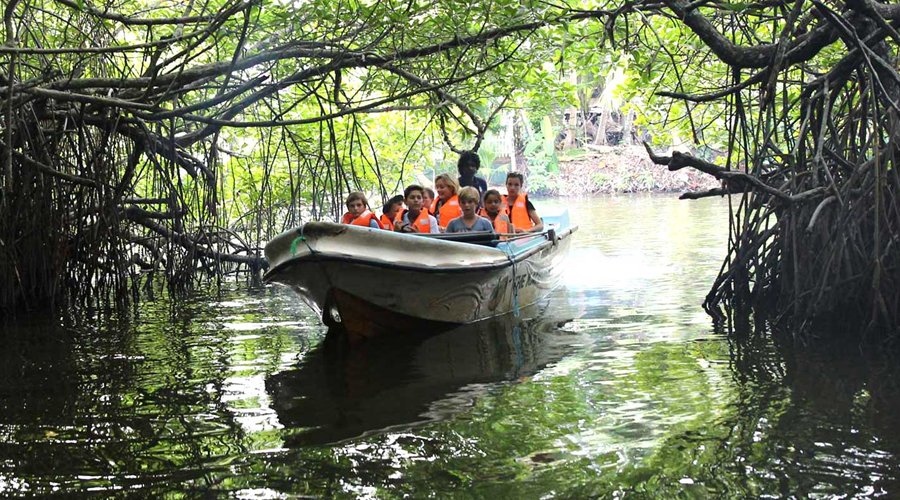
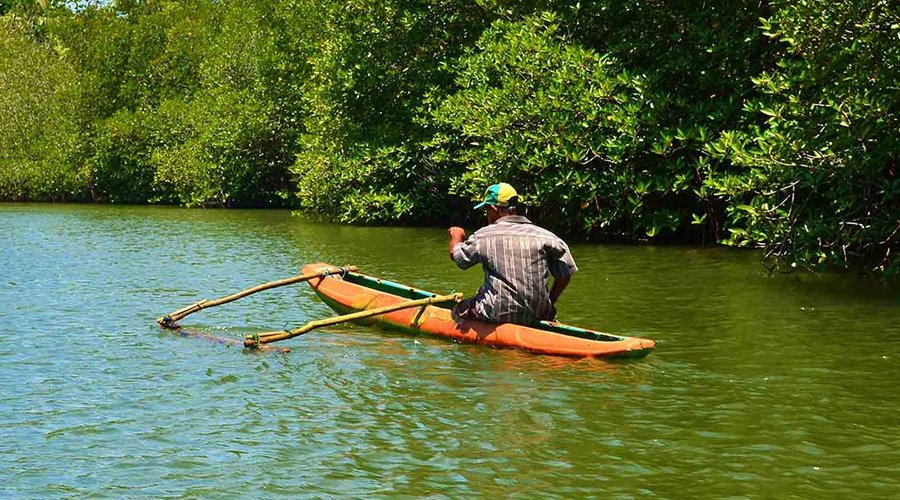
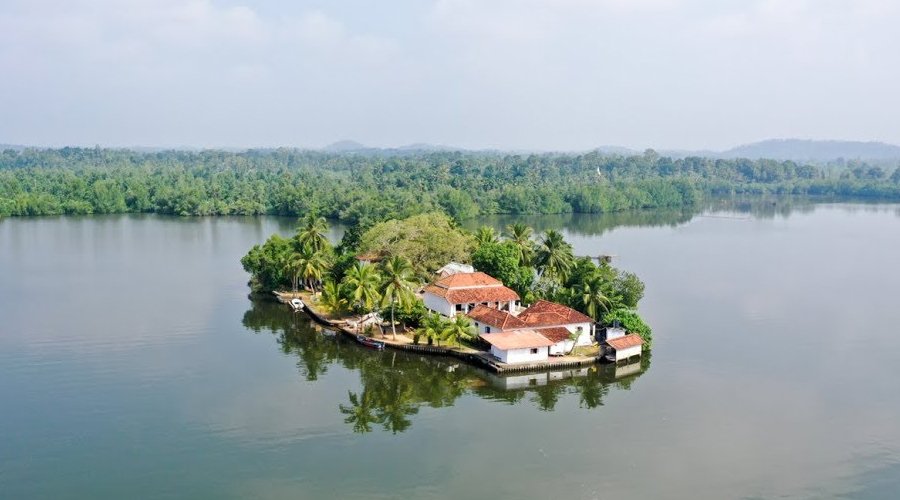
The Madu Ganga is a shallow river in the south-west of Sri Lanka that flows into the sea at Balapitiya. According to the story, there are 64 islands in the Madhu Delta, but most of them appear to be submerged since only 25 islands are reported. 15 islands have a larger land mass. Some of the islands are inhabited, but all are covered with forests and shrubs. One of the larger inhabited islands, `Koth Duwa`, houses a Buddhist temple that dates back to the days of the oldest kings of Sri Lanka. The main source of income for the locals of the Madu Ganga (River) region is the cinnamon industry. The fresh cinnamon is brought here to be peeled. This also means that here, cinnamon can be purchased at the best quality at reasonable prices.Those who are not in the cinnamon industry live from fishing or as boat leaders. The fishermen sit either on large branches, which are planted in the water, or fish with sticks. Or they bind nets between the branches that are planted in the water to catch fish. Together with the smaller Randombe lake, with which the Madu Ganga is connected by two narrow canals, it forms the Madu Ganga wetland area. Its mouth and the many mangrove islands form a complex coastal wetland ecosystem. It has high ecological, biological, and aesthetic importance. It is home to 303 species of plants from 95 families and 248 species of vertebrate. It could be one of the last remaining tracts of unspoiled mangrove forests in Sri Lanka.


